Interview with Illustrator Krittika Mittal – A Honest Talk on Art & Self-Doubt
Krittika Mittal is an Indian illustrator and designer based in Baltimore. She studied architecture in New Delhi, taught herself graphic design, and spent five years freelancing for clients like Versace and Goodearth before going back to school for an MFA in Illustration Practice at MICA, where her thesis, Finding Emo, won awards from Communication Arts, American Illustration, and Creative Quarterly.
Krittika is refreshingly honest about her imposter syndrome, the years of doubting her colorful style, and the slow process of learning to trust her own voice. She’s someone who built a successful freelance career and a teaching practice by figuring things out along the way.
Find more by Krittika Mittal in her portfolio artkrittique.work, on Instagram instagram.com/artkrittique
You started out studying architecture in India, and you’ve said that making art made you happier than making buildings. Was there a specific moment where that clicked, or was it more of a slow shift?
It was more of a slow shift. During my junior year of architecture school, I saw a student drawing with a Wacom tablet and was instantly intrigued. It led me to explore Photoshop and Illustrator, and I became fascinated by the vivid colors, the printing techniques, and the capacity for expression. It felt like an avenue to create work that reflected my personal taste and identity without the rigid technical restrictions of architecture.
My undergraduate program encouraged creativity, but didn’t always teach us how to build those specific creative muscles. Making illustrations allowed me to create without the crushing pressure of perfectionism, which ultimately made me much happier. By my final year, I knew I was only finishing the degree to have it; I didn’t want to practice architecture anymore. Three months after graduation, I took the leap and started as a junior graphic designer at a small creative agency.
After architecture, you taught yourself design and built a full freelance career, and then chose to go back to school for an MFA in Illustration at MICA. What made you decide to step away from a working career and invest in being a student again?
I wish answering this would get easier! Even with a professional career, I struggled with imposter syndrome as a self-taught artist. I often felt like I was performing the role of an artist rather than truly being one. I was really inspired by the work illustrators were doing globally, and living in India at the time, I felt like I was working in a bit of a silo.
I craved a peer group of illustrators to collaborate and hang out with. Eventually I was taking online courses every few months to learn different skills, and I realized a Master’s was the perfect way to accelerate my growth and find my footing. I stand by that decision completely—it was the best move I ever made. I can finally call myself an artist with confidence, which is perhaps the best thing to come out of the program.
“I’ve accepted that 70% of what I do in my sketchbook is “average at best,” and that’s okay because that is the space meant for churning out raw ideas.”
You’ve said your MFA manifesto included building a consistent sketchbook practice, and that you struggled with imposter syndrome, feeling your sketches “looked average at best” despite years of professional work. How did pushing through that?
My perspective on sketchbooks has shifted entirely. I realized I was struggling with the “social media” version of a sketchbook, where every page is a finished masterpiece. Now I treat it as a developmental space. It’s a muscle: the more I draw, the stronger the ideas become.
I’ve accepted that 70% of what I do in my sketchbook is “average at best,” and that’s okay because that is the space meant for churning out raw ideas. It’s a full-circle moment now because I teach an undergraduate class on building a sketchbook practice. I often see my students in the exact same boat I was in, and I love helping them navigate that transition from perfectionism to exploration.
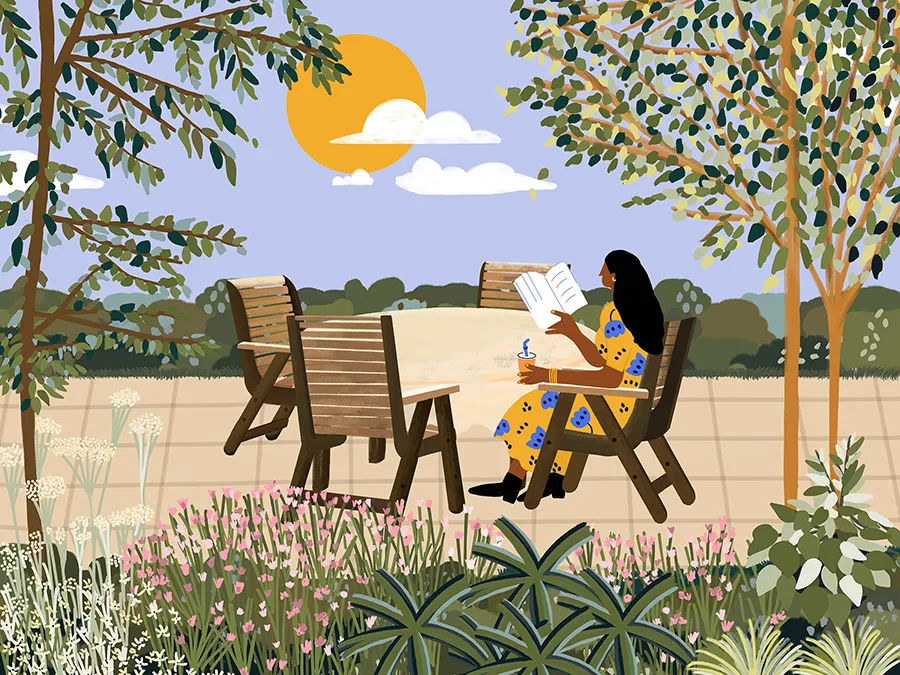
Your illustrations have this beautiful warmth and coziness, always with these inviting color palettes. You’ve described you often have a common theme of “finding joy and comfort in everyday things.” Is that intentional, or did it emerge naturally from drawing the things you love?
It’s a bit of a “did the chicken come first or the egg” scenario. It started with an intent to make art that was approachable, drawing the things I naturally loved, with the caveat that they had to be things other people loved too. However, because I hadn’t fully interrogated why I was drawn to those scenes, I had a bit of mistrust in my instincts. I worried my work was just “Pinterest Pretty”, which, in my mind at the time, felt like a failure, even though people were connecting with it.
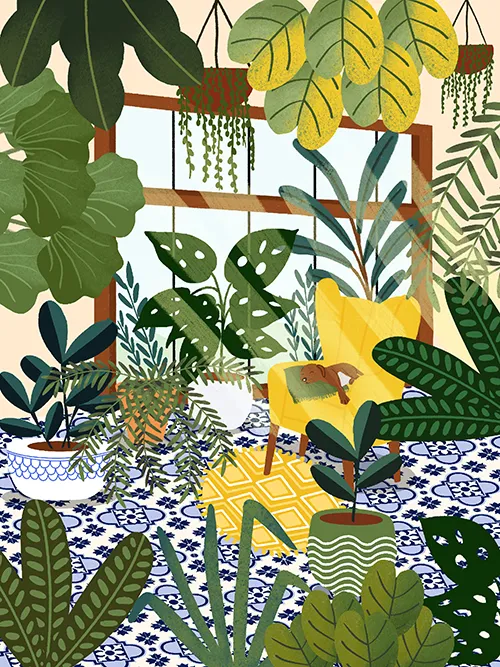
When I started my MFA, I realized I had nothing to lose and decided to draw exactly what I wanted, regardless of client or audience expectations. During my thesis, I kept returning to the theme of human connection and how everyday moments can capture massive emotions. Now, I can confidently say this is my authentic voice. I think my younger self was capturing it all along; I just needed the confidence to trust it.
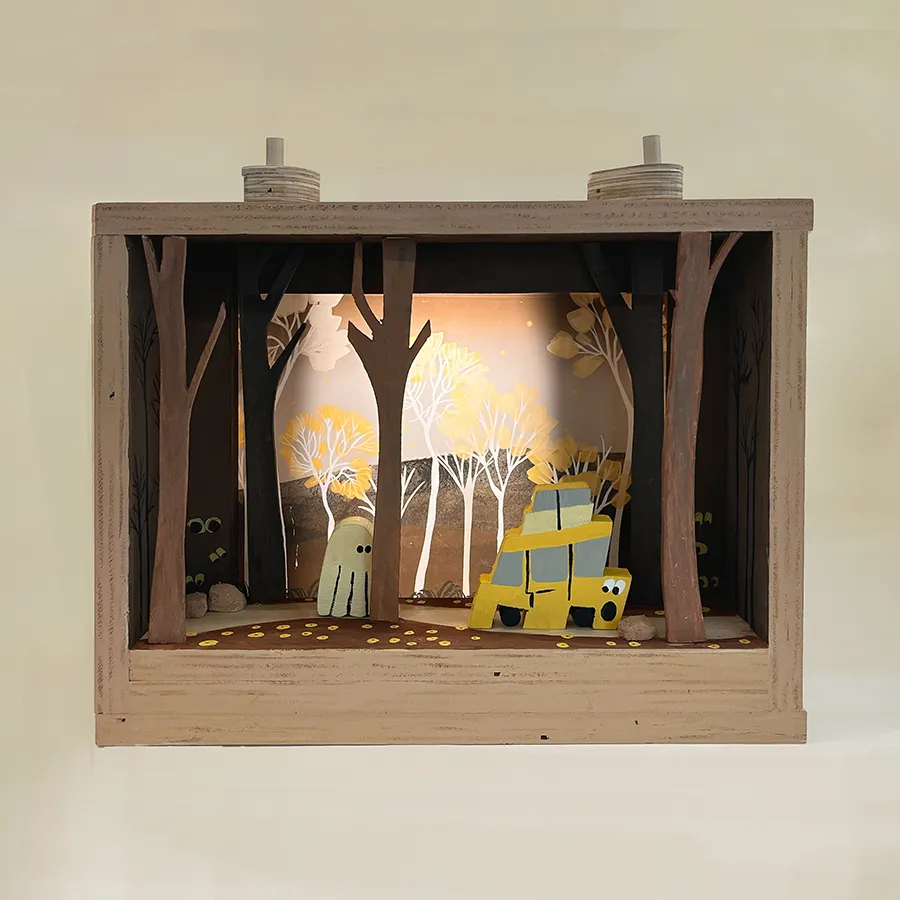
Wooden crankie, inspired by Konkan Folklore
“I view it as a duty to my identity and my memories to weave them into my current world. I don’t see it as pushing an identity on someone, but rather as showing them the beauty of something different.”
You weave South Asian visual language and folklore into your work while living in the U.S. How do you navigate holding onto that cultural identity in your art?
It comes down to how important my stories are to me. Illustration allows me to lean into the specific nuances of memory and experience. I believe exposure to diverse voices and cultures is vital, and it expands our collective worldview.
I view it as a duty to my identity and my memories to weave them into my current world. I don’t see it as pushing an identity on someone, but rather as showing them the beauty of something different. For example, I recently worked on a project about the rituals Indian children have around eating mangoes. It brought me so much joy to share those specific, sticky, sun-drenched memories with people from entirely different cultures and realize that the feeling of childhood joy is universal, even if the fruit is different.
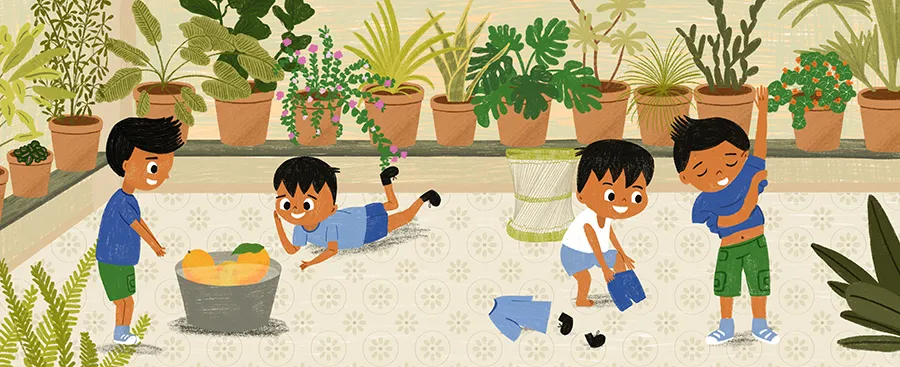
“How to Eat A Mango” by Krittika Mittal
Your MFA thesis won awards from Communication Arts, American Illustration, and Creative Quarterly, that’s a remarkable sweep. Can you walk us through what the thesis project was about and why it resonated so widely?
Yes! My thesis was called Finding Emo and was a take on being able to get in touch with my emotional side. As an artist, my primary driving force had been capturing emotion through my illustrations. In the past, my self-directed projects have aimed to evoke nostalgia, a perfectly preserved past, and a sense of hope and connection. But for my thesis, I wanted to explore a wider range of emotions and memories such as grief, fear, and love using various materials and mediums, and centering my own experiences in this research. These artworks served as visual narratives, inviting viewers to engage with their own emotions and memories.
I believe it resonated because it tapped into the ‘quiet’ experiences most of us share but rarely acknowledge, like the specific anxiety of loneliness or the profound tenderness of someone cooking a meal for you as an expression of love. By designing the gallery to look like a home, I was able to physically place people inside those emotions. I am so grateful that the judges and the public saw themselves in my ‘home’.
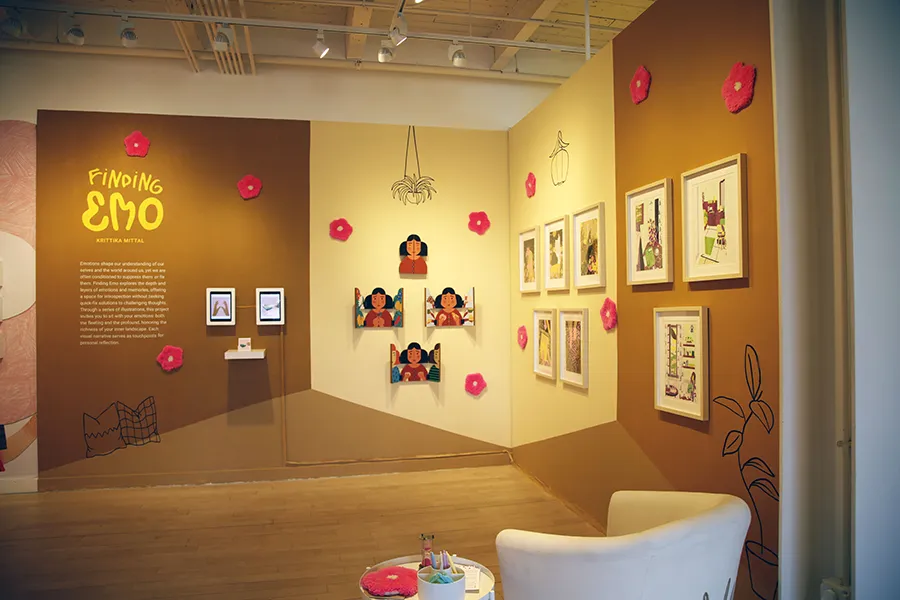
From Krittika Mittal’s Thesis “Finding Emo”
During your MFA, you expanded from digital illustration into tufting, ceramics, and risograph printing. What drew you to exploring other art mediums?
The straightforward answer is that my program requires it! In my first year, we had workshops every few weeks on different mediums such as wood, ceramics, fabric, and risograph printing. But beyond the requirement, I was fascinated to see how my illustrations translated into 3D spaces or different textures.
It allowed me to add layers of meaning to my work. For example, when I turned 30, I created a triptych as a “cabinet of curiosities” themed homage to my life. Each panel represented a decade of my life and was made of objects precious to me. I built a cupboard for these illustrations and hand-painted the exterior with motifs from my mother’s hometown. Having access to those various shops and tools was an opportunity I simply couldn’t get enough of.
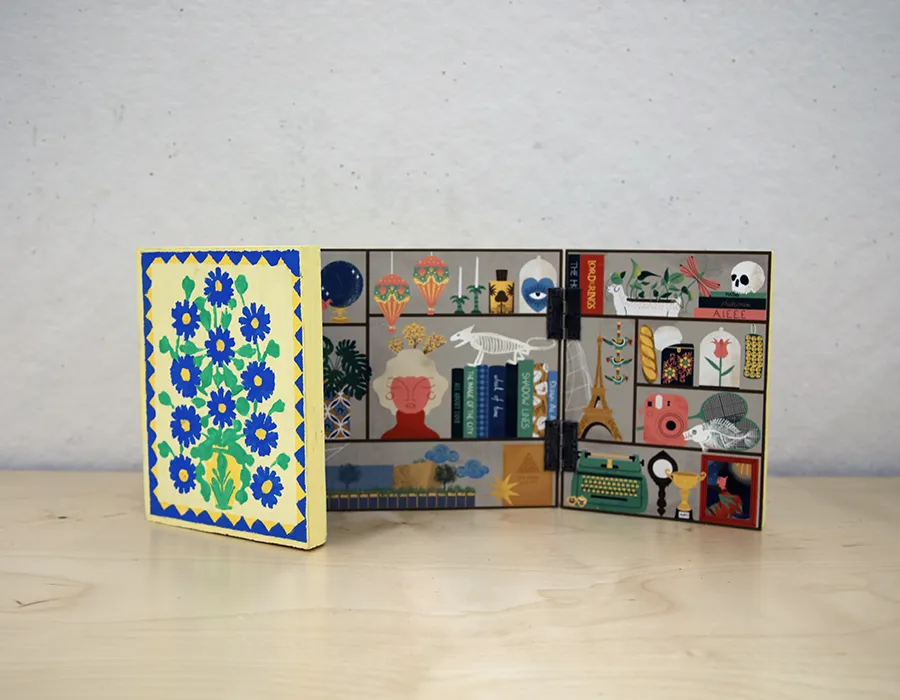
“Cabinet of Curiosities”
Your handcrafted paper project “You Can’t Kill These” is so lovely! And that title immediately grabs my attention. What’s the story behind that project?
Back in college, I used to kill my plants all the time, but I still wanted that greenery in my life! The project was also an excuse to use my architecture and model-making skills to bring a 2D illustration into a 3D space.
My pitch for it was: “Are you a ‘busy bee’ with a penchant for beauty? Allow me to introduce ‘You Can’t Kill These.'” It consists of meticulously handcrafted paper plants and flowers. They are made of thick archival paper and wood, exuding a fragility that belies their durability, and come nestled in glass cloches. They are eco-friendly, fuss-free, and perfect for renters or pet owners who want greenery without maintenance. It was a way to prove that pretty things can be practical, too.
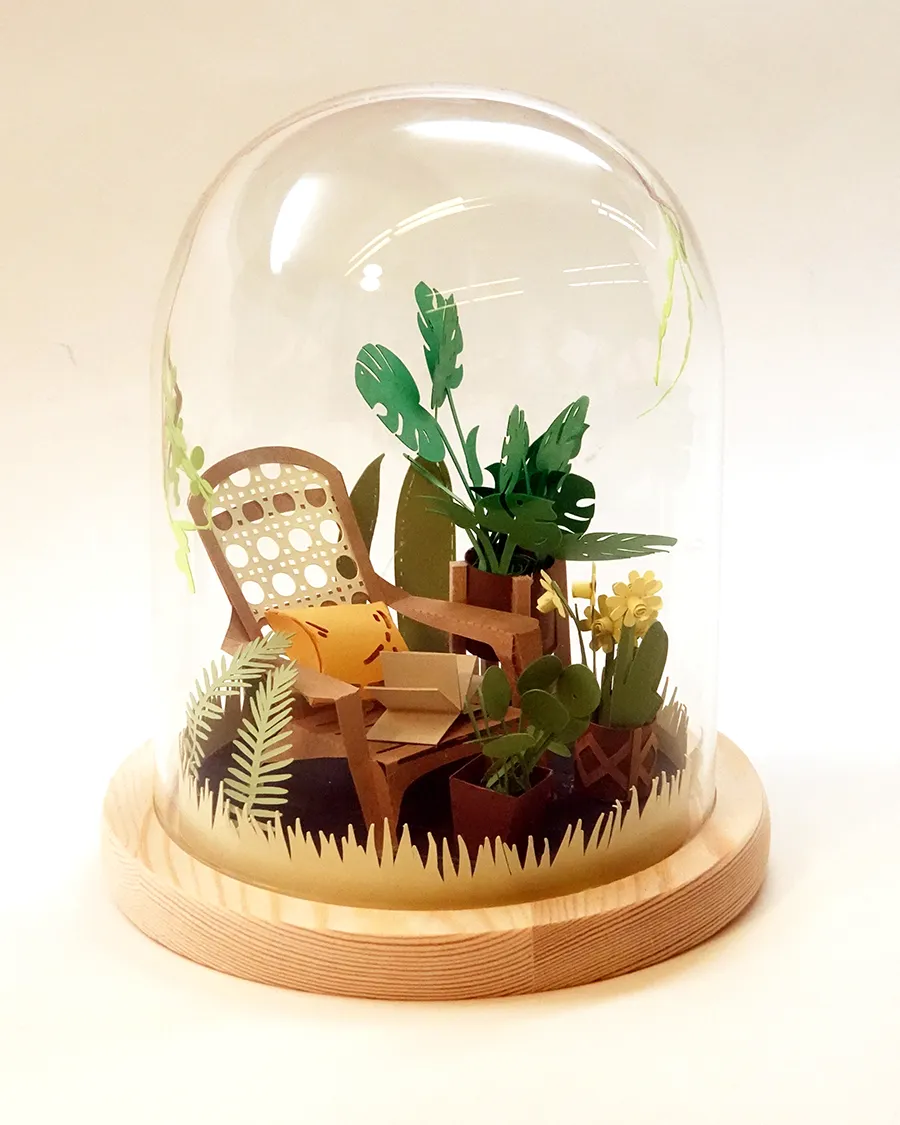
“You Can’t Kill These” by Krittika Mittal’
You’ve taught almost 5,000 students on Skillshare with your classes, and also teach illustration to middle school and undergraduate students. What’s the most common thing you see holding new illustrators back, and what do you tell them?
Fear of self-promotion. I learned this the hard way and still have to remind myself of it today. I once heard an artist say that people aren’t necessarily looking for the most “perfect” illustrator; they want someone who is good, reliable, and whose name they actually know. You have to advertise yourself, even if you don’t feel 100% ready.
Secondly: keep making work. If you’re between projects, make the work you wish you were hired for. Try out different things even if you feel like you haven’t found your artistic style. Hone your skills and the rest will follow.
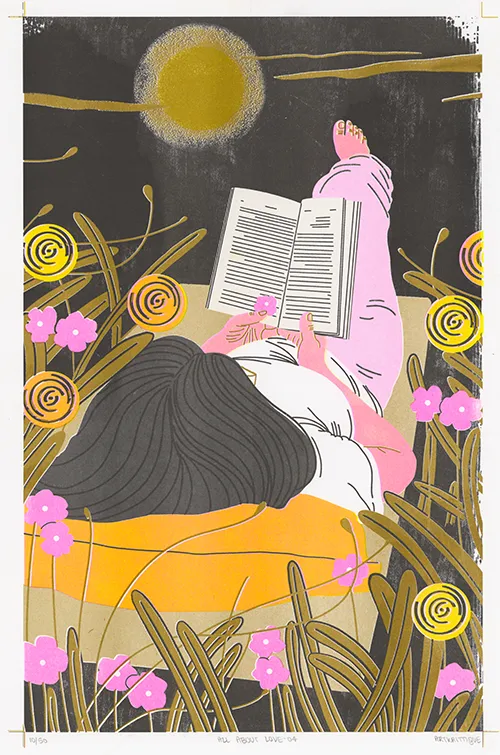
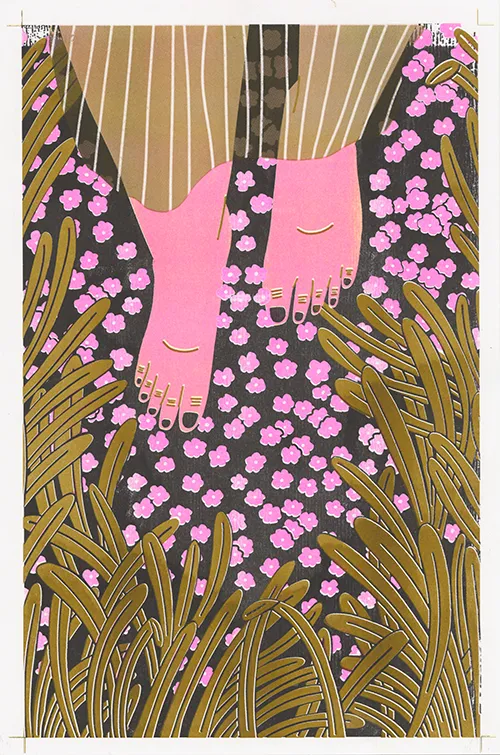
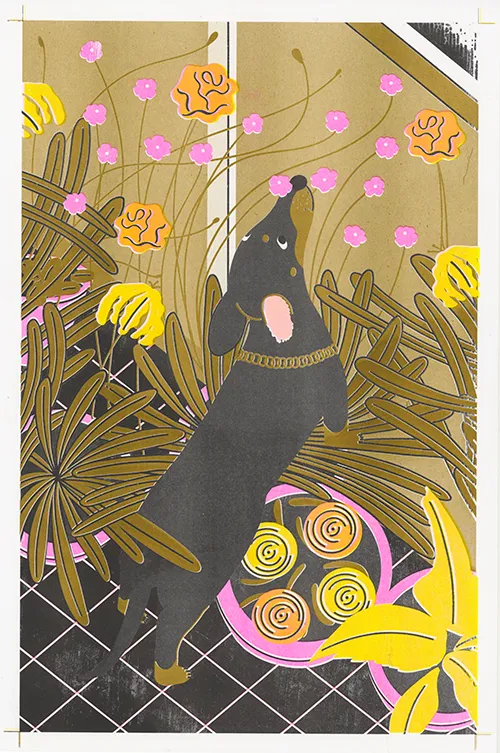
All About love, MFA Illustration Thesis
“…Ask for more money than you think you should, track every expense, and always keep your hands in a few different things. The diversity of both skills and income streams is what makes a creative career truly sustainable.”
You’ve worked with brands as different as Versace and the French Embassy in India, and you’ve also sold your own prints through your own shop. For illustrators looking to build a sustainable creative career, what’s something you wish you’d known earlier about the business side?
Early in your career, say yes to projects that are outside your comfort zone and treat them as paid learning opportunities. That curiosity is exactly what built my career. When I first started freelancing, I worked with small businesses and startups; the pay was often modest, but the experience was incredibly hands-on.
That allowed me to develop a toolkit I could use for my own brand later. For instance, my shop started because I was posting illustrations online, and people began asking for prints. I already knew how to set up the backend because I’d helped a previous client with their Shopify storefront, and I already had a packaging supplier from a different past project. Those disparate experiences eventually click together.
Another thing that has helped me navigate multiple streams is having a system I can follow. I usually carry a small notebook with me where I make a list of deadlines and schedules, and I spend a few minutes every morning planning out how I can take on my to-do list.
My best advice? Ask for more money than you think you should, track every expense, and always keep your hands in a few different things. The diversity of both skills and income streams is what makes a creative career truly sustainable.
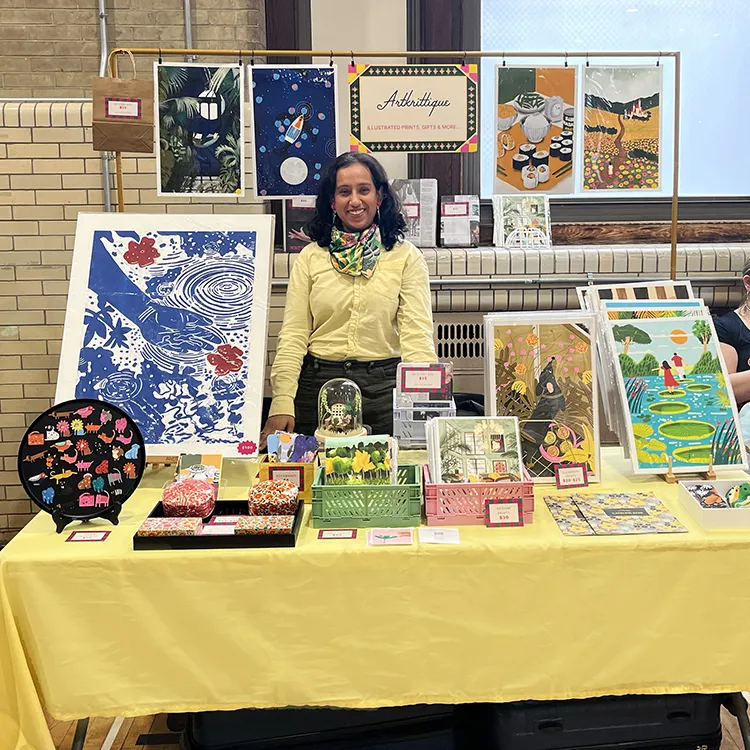
What’s next for you, what are you excited about right now?
I’ve been taking on more editorial illustration and publishing projects lately, which is exciting because it still feels like a new space for me. But honestly, I’m just as excited for the spring semester to wind down so I can make art without a brief again, just following whatever feels interesting.
Find more by Krittika Mittal in her portfolio artkrittique.work, on Instagram instagram.com/artkrittique